By Chinedu Okpara
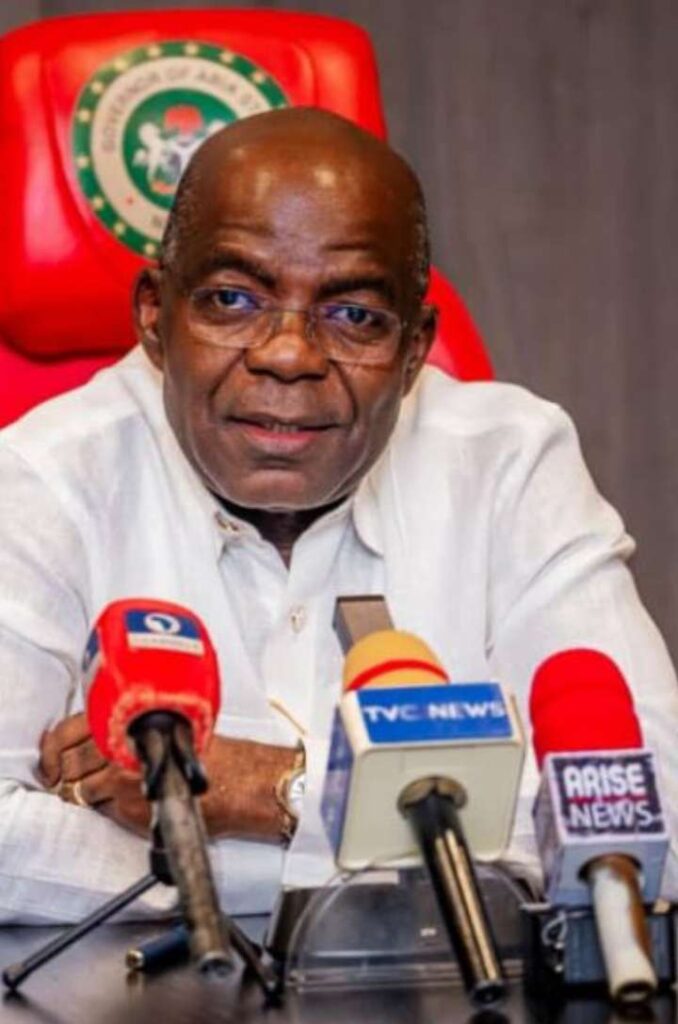
As Nigeria approaches another pivotal election season, Abia State Governor, Dr. Alex Otti, has sent a thunderous message to those allegedly plotting to manipulate the 2027 governorship election. In a declaration that has since reverberated across political circles, Otti warned that anyone planning to rig the upcoming polls “should write their wills,” asserting that the era of electoral robbery in Abia is permanently over.
Speaking during a civic engagement event in Umuahia, the governor reiterated his administration’s zero-tolerance stance against electoral malpractice and political intimidation. His words, delivered with unmistakable conviction, have reignited national conversations about electoral reform, governance integrity, and the evolution of democracy in Nigeria’s South-East.
Otti’s Declaration: A Message Beyond Politics
Governor Otti’s words carried a weight that transcends the immediate political context. For many observers, his warning reflects both personal conviction and the painful memories of his own battles against political manipulation in previous elections.
In 2023, Otti, then candidate of the Labour Party, achieved what many described as a “people’s revolution.” He defeated long-standing political structures and became the first opposition figure in two decades to take control of the state. That victory, though historic, was nearly derailed by alleged attempts at result manipulation — incidents that Otti has repeatedly referenced as reminders of why electoral integrity must never again be compromised in Abia.
He told his audience in Umuahia:
“We fought for our mandate in 2023 because the people’s will was under threat. Let it be known that anyone who plans to rig Abia’s 2027 governorship election should write their wills now. Abians will not tolerate it again.”
Abia’s Political History and the Otti Factor
To fully grasp the gravity of Otti’s statement, one must understand the political context of Abia State. Since Nigeria’s return to democracy in 1999, the state had been dominated by entrenched political interests and what analysts described as “godfather politics.” For years, leadership transitions were determined less by the people’s votes and more by elite bargains.
That cycle began to break in 2023 when Otti’s campaign resonated with a growing desire for change. His administration has since embarked on wide-ranging reforms focusing on fiscal transparency, infrastructure renewal, and civil service accountability.
In particular, his commitment to transforming Aba — the state’s commercial capital — has earned him wide acclaim. Road rehabilitation, waste management reforms, and power initiatives have revived confidence among residents and investors alike.
Political analyst Dr. Emeka Nwosu, a lecturer at the University of Nigeria, Nsukka, summarized the shift:
“Alex Otti represents a generational break from the old Abia politics. His statement is not just about elections — it’s about defending the new culture of governance he’s trying to build.”
National Context: Nigeria’s Unending Struggle with Electoral Integrity
Governor Otti’s warning also draws attention to Nigeria’s long and troubled history of electoral malpractice. Despite successive electoral reforms and technological innovations such as the Bimodal Voter Accreditation System (BVAS), challenges persist.
Vote buying, violence, result falsification, and post-election litigation continue to undermine public trust in the democratic process. According to a 2024 report by the Centre for Democratic Development (CDD), at least 41% of Nigerians still doubt the credibility of state-level elections.
Otti’s stance, therefore, resonates as a call to defend democratic values at both state and national levels. By speaking publicly, he appears determined to set a precedent that electoral integrity can and must be protected by political leadership.
Citizens’ Reactions: Hope, Fear, and Determination
Across Abia’s 17 local government areas, the governor’s statement has sparked passionate debates. In Aba, traders and residents expressed strong support for Otti’s declaration, describing it as “courageous” and “necessary.”
Chioma Nwankwo, a fashion designer at Ariaria Market, told SaharaNews247:
“In the past, we used to feel helpless. Now, we have a governor who talks like someone ready to defend our votes. Let them hear — Abia people will not go back.”
Uche Ndukwe, a civil servant in Umuahia, shared a more cautious view:
“We love what Otti is doing, but he must also make sure security agencies are neutral. Sometimes it’s not about politicians alone; it’s the system that fails the people.”
On social media, hashtags such as #DefendAbiaVote and #OttiSpeaksTruth trended regionally, reflecting widespread interest in the governor’s message.
Opposition Reactions: Between Criticism and Concern
While many applauded Otti’s courage, opposition figures interpreted his comments as political grandstanding. A spokesperson for one opposition party, speaking anonymously, said:
“We understand his passion, but his words sound threatening. The governor should allow INEC and the people to do their jobs instead of issuing emotional statements.”
Political analysts, however, argue that such criticisms are misplaced. Otti’s remarks, they say, are less about intimidation and more about deterrence — a public warning that the state will not tolerate electoral crimes.
Professor Chika Okafor, a political sociologist at Abia State University, noted:
“In a country where rigging has become normalized, strong words like Otti’s can serve as a moral and psychological defense of democracy. It sends a message to would-be offenders that there will be consequences.”
Strengthening Institutions: Otti’s Broader Strategy
Beyond rhetoric, Otti’s administration has been quietly working to strengthen the institutional framework for credible elections. Collaboration between state agencies, civil society, and security services is being prioritized to enhance civic awareness and reduce political violence.
The Abia State Ministry of Information recently announced plans to launch a Citizens’ Election Watch Program in 2026 — a pre-election sensitization initiative aimed at educating voters on their rights, encouraging peaceful participation, and discouraging electoral crimes.
Observers say this aligns with Otti’s belief that defending democracy requires both government will and citizen vigilance.
Economic Transformation as a Political Shield
One of Otti’s strongest arguments for continuity in 2027 lies in his government’s achievements in economic and infrastructural reform. In less than two years, his administration has attracted renewed private investment into Aba’s industrial clusters, improved revenue collection systems, and restored investor confidence long lost under past administrations.
Infrastructure projects such as the Aba-Owerri Road, Port Harcourt Road rehabilitation, and Ariaria Market modernization have further cemented his image as a performance-driven leader.
Mrs. Blessing Okorie, an Aba-based entrepreneur, remarked:
“Before Otti, we had leaders who talked but did nothing. Now, the difference is visible. We can see the roads, the lights, and better management of public funds. That’s why people are ready to defend their votes in 2027.”
Political analysts believe this tangible progress explains Otti’s growing political capital and why his warning to potential riggers resonates deeply among the populace.
Expert Insight: The Battle Between Reform and Regression
Political commentator Dr. Olisa Akam, a governance expert based in Lagos, sees Otti’s warning as a defining moment for Nigerian subnational democracy.
“What Otti has done is to publicly raise the moral cost of electoral fraud. When a sitting governor openly tells political actors to ‘write their wills,’ he is creating a moral firewall around his state’s democracy. Whether you love or hate him, that statement redefines the psychology of political contest in Nigeria.”
Dr. Akam added that similar declarations from reform-minded governors across other states could help dismantle the entrenched culture of rigging that continues to haunt Nigeria’s electoral process.
The Role of INEC and Security Agencies
As preparations for the 2027 elections intensify, attention will inevitably turn to the Independent National Electoral Commission (INEC) and Nigeria’s security architecture. The success of Otti’s reformist message depends largely on the impartiality and professionalism of these institutions.
Election monitoring groups have repeatedly called for early logistics planning, transparent collation processes, and increased voter education. Otti’s insistence on a peaceful and credible election aligns with those recommendations, but the challenge remains whether Nigeria’s broader political structure will support such ideals.
Historical Lessons: Abia’s Journey to Political Freedom
From 1999 through 2019, Abia’s elections were often characterized by widespread manipulation. The infamous 2015 gubernatorial election, for instance, saw multiple court challenges, missing result sheets, and allegations of vote padding.
By contrast, the 2023 election that produced Otti marked a sharp departure. For the first time, results reflected grassroots sentiment rather than elite interests. That turning point explains why Otti’s administration views 2027 not just as another election year but as a test of whether Abia’s democratic freedom can endure.
The Broader Implication for Nigerian Democracy
Otti’s warning carries a symbolic resonance that extends far beyond Abia. In a country where political violence, manipulation, and corruption have long undermined governance, his statement serves as a rallying cry for ethical politics.
If other state leaders embrace a similar commitment to credible elections, Nigeria could witness the gradual rebirth of genuine federal democracy — one where performance, not patronage, determines leadership outcomes.
In the words of civic activist Aisha Mohammed, of the NGO Voices for Democracy Africa:
“Otti’s message is the kind of political courage Nigeria needs. Democracy will never be strong until leaders start defending it, not just enjoying it.”
Conclusion: A Test of Will and Integrity
As the countdown to 2027 begins, Abia’s political future will test not just Governor Otti’s leadership but the resilience of the people’s democratic spirit.
His declaration that would-be riggers should “write their wills” may sound fiery, but beneath the passion lies a deeper truth — that democracy cannot survive without courage. Abia’s 2027 election will not only determine who governs next; it will measure whether Nigerians are finally ready to defend the sanctity of their votes.
If Otti succeeds in preserving electoral integrity while deepening reforms, Abia could emerge as a model for the rest of Nigeria — proof that democracy can indeed deliver when leadership aligns with the people’s will.
Author:
Chinedu Opara is a Nigerian journalist, international political analyst, and senior columnist for SaharaNews247. His work focuses on governance reform, electoral transparency, and socio-economic development across Africa.