
By Smart Chuks,
Nigeria was thrust into global headlines after yet another devastating school abduction took place in Niger State. On Friday, 21 November 2025, armed assailants stormed St. Mary’s Catholic Primary and Secondary Schools in Papiri community, Agwarra Local Government Area, abducting hundreds of students and teachers.
Updated verification by church authorities and the Christian Association of Nigeria confirmed that 315 individuals remain missing. Of this number, 303 are students, while 12 are teachers and staff.
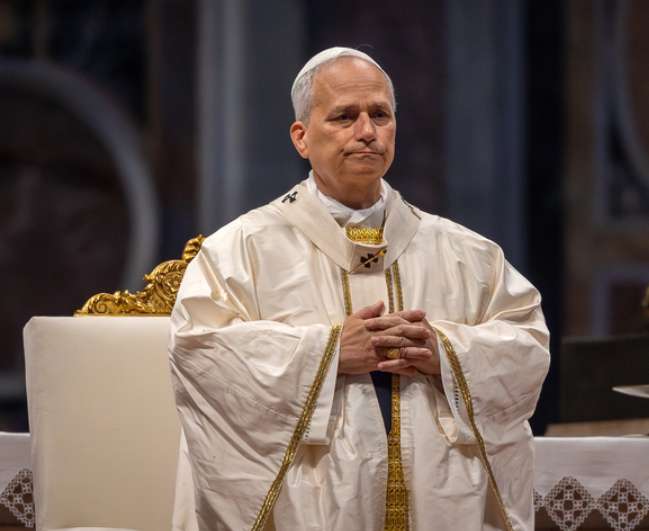
Days later, the crisis escalated to an international issue when Pope Leo XIV, during his Sunday Angelus address in Vatican City, publicly demanded the unconditional release of the abducted children and educators.
His message was emotional, clear, and urgent — a call that has now placed Nigeria under the global spotlight.
What We Know So Far
According to church officials, eyewitnesses, and security sources, the armed group attacked the school during the early hours when most students were asleep.
Witnesses say the kidnappers arrived on motorcycles and trucks, forced the victims into vehicles, and drove toward forest terrain known for previous criminal activity. Attempts by local security teams and volunteer community hunters were reportedly unsuccessful due to the attackers’ preparedness and knowledge of the area.
Authorities and community leaders spent hours compiling attendance registers and interviewing survivors to confirm the number of missing students and staff. The verification process finalized the figure at 315.
This incident now ranks among Nigeria’s largest school abductions, alongside the Chibok abductions of 2014 and others that followed.
The Pope’s Message: A Global Spotlight
During his address before thousands at St. Peter’s Square, Pope Leo XIV said he was deeply saddened and concerned about the attack.
He stated:
“With a heavy heart, I call on those responsible for this terrible act to release the children and their teachers immediately. No conflict, belief, or grievance justifies such cruelty. Children belong in classrooms, not captivity.”
The Pope also invited Catholics, global faith communities, humanitarian networks, and world leaders to unite in prayer and action.
This statement transformed a domestic tragedy into a global humanitarian appeal, and it may influence diplomatic negotiations, humanitarian aid, and international pressure on Nigerian authorities.
National Reactions
Federal Government Position
The Federal Government described the abduction as a “national tragedy” and confirmed active rescue operations involving:
Military tactical units
State Security Service
Police intelligence response teams
Local hunter networks familiar with the terrain
Officials say caution is needed to prevent putting the victims in further danger.
Niger State Government Response
The Niger State Governor announced temporary closures of boarding schools in vulnerable areas and promised improved security architecture. Many parents, however, say assurances are no longer enough without visible results.
Religious and Civil Society Response
Church groups, interfaith coalitions, humanitarian NGOs, and civil society organizations have condemned the attack. Prayer vigils are ongoing across the country.
Human rights organizations warn that Nigeria is facing an educational emergency in regions where learning institutions have become recurring targets.
The Victims: More Than Numbers
Behind the reported figure are real families, real children, and real futures.
Many of the abducted students are between ages 10 and 18, and some are the first in their families to receive formal education.
Parents describe the situation as a nightmare. One mother, speaking through tears, said:
> “Every morning we wake hoping for news. Every night we go to bed afraid. We just want our children back alive.”
For many in rural Niger communities, schools—especially mission schools—represent their best hope for escaping poverty. Now, that hope hangs in uncertainty.
Why Schools Are Being Targeted
Experts identify several key reasons:
Economic Incentive
Mass kidnappings have become a recurring crime trend because they yield high ransoms. Criminal networks see children as leverage.
Weak Rural Security Infrastructure
Possible Outcome Scenarios
Remote communities often lack permanent police presence and rely on irregular patrols or under-resourced security units.
Poor Intelligence Coordination
Analysts argue that failure to integrate local intelligence, community policing, and advanced surveillance creates security blind spots.
Extremism and Fear Tactics
Although not always ideological, some kidnappers use abductions to spread fear and undermine public confidence in government authority.
International Implications
The involvement of the Pope means the global Catholic community — more than 1.3 billion people — is now aware and emotionally connected to the situation.
Diplomatic analysts predict:
Increased pressure from the United Nations
International diplomatic engagement from the EU, Vatican, and AU
Expanded humanitarian support from global charities
Possible foreign advisory assistance on hostage negotiation and intelligence
Nigeria may now face deeper questioning about security accountability and the protection of children, especially in rural education systems.
Experts outline four likely outcomes:
Negotiated Release
This remains the most common outcome in previous Nigerian mass abductions.
Tactical Military Rescue
This is possible but carries high risk, especially with a large number of minors involved.
Gradual Escapes and Recovery
Some captives in past incidents escaped during relocations or captivity.
Prolonged Detention
The most feared scenario is that the group remains in captivity for months or longer.
Authorities have not publicly disclosed their approach.
What Needs to Change — Permanently
Security and policy experts insist Nigeria needs:
A national School Protection System
High-level intelligence coordination
Community-centered surveillance and emergency reporting frameworks
Drone-assisted forest monitoring
Laws and financial tracking systems to disrupt ransom economies
Trauma support programs for recovered victims
Without structural reform, observers warn such tragedies will continue.
Conclusion
The kidnapping of 315 students and teachers in Niger State is more than a news story — it is a test of national security, leadership, and international humanity.
Pope Leo XIV’s appeal has intensified global attention and moral urgency. Families are still waiting, hoping, praying, and demanding answers.
Nigeria stands at a crossroads: allow this tragedy to become another statistic, or confront the systemic failures enabling such crimes.
As the world watches, one truth remains clear:
Children must never become bargaining chips.
SaharaNews247 will continue to follow verified developments and provide ethical, responsible reporting.
Author Bio
Smart Chuks is a journalist and senior news analyst at SaharaNews247. With more than eight years of field and editorial experience, he specializes in national security, policy reporting, and humanitarian crisis analysis. He has covered stories across West Africa and advocates responsible, trauma-sensitive journalism.

