
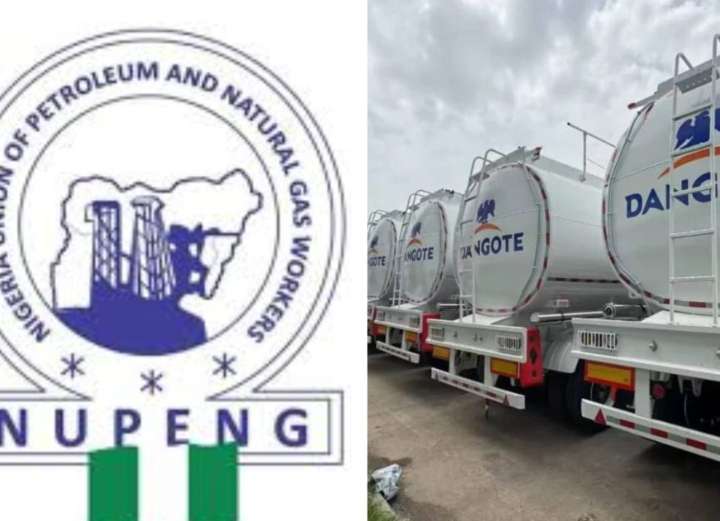
The ongoing dispute between the Nigerian Union of Petroleum and Natural Gas Workers (NUPENG) and Africa’s richest man, Aliko Dangote, has sparked a nationwide shutdown of fuel distribution. The confrontation has quickly become one of the most significant labour battles in Nigeria’s recent history, with ripple effects across the economy, politics, and daily life.
At the heart of the standoff lies the Dangote Refinery’s operations and NUPENG’s insistence on protecting workers’ rights. This conflict raises urgent questions about monopolistic tendencies, labour rights, economic stability, and the future of Nigeria’s energy industry.
The Genesis of the Conflict
NUPENG has long been a powerful force in Nigeria’s oil and gas sector, representing tanker drivers, petroleum workers, and other key stakeholders who ensure the lifeblood of the nation’s economy—fuel—keeps flowing.
The tension with Dangote emerged after allegations that the refinery’s management was adopting practices that excluded NUPENG members and potentially undermined established labour structures. Union leaders argued that tanker drivers and fuel transporters were being marginalized, threatening job security and long-standing agreements between unions and petroleum marketers.
As NUPENG moved to assert its authority, the confrontation escalated into a strike action, effectively halting fuel distribution nationwide.
Immediate Implications: A Nation on Edge
Fuel scarcity is one of Nigeria’s most politically sensitive issues. Within days of the strike, petrol queues began to snake around major cities. Black-market fuel sales resurfaced, with prices doubling in some areas. Transport costs rose, hitting commuters and traders hard, while small businesses reliant on generators struggled to keep operations running.
The Federal Government, already grappling with inflationary pressure and public discontent, now faces the challenge of balancing investor confidence in Dangote’s $20 billion refinery with the protection of workers’ rights.
Historical Perspective: NUPENG’s Power in Labour Struggles
This is not the first time NUPENG has flexed its muscles. In the 1990s, the union was at the forefront of protests against military rule, using fuel strikes as a weapon to paralyze the economy and force political concessions.
During democratic eras, NUPENG’s strikes over fuel subsidy removal and wage disputes repeatedly crippled the economy. What makes the Dangote confrontation unique is that it pits the union not against the government directly, but against a private conglomerate whose refinery is projected to dominate Nigeria’s energy market.
The strike is therefore more than a labour dispute—it is a defining test of how Nigeria balances monopoly power, workers’ rights, and national interest in the new energy order.
Economic Fallout: Inflation and Energy Security Risks
The shutdown of fuel distribution poses significant risks to Nigeria’s already fragile economy:
Transport Sector: Bus fares surged in Lagos and Abuja as scarcity worsened. Logistics costs rose, hitting e-commerce and trade.
Inflationary Pressure: Food prices climbed as farmers and traders struggled to transport goods. Nigeria’s inflation, already above 30%, faces new upward pressure.
Business Disruptions: Small and medium enterprises (SMEs), heavily reliant on petrol and diesel generators, reported reduced productivity.
Revenue Losses: With fuel depots locked down, the government risks losing billions in tax revenue from fuel sales.
These impacts highlight how quickly a strike in the energy sector can destabilize Nigeria’s economy, making resolution urgent.
Regional Spotlight: How Cities Are Feeling the Pinch
Lagos: As Nigeria’s commercial hub, Lagos experienced the earliest fuel queues. Transport fares doubled, and ride-hailing drivers withdrew services.
Abuja: Government workers and commuters bore the brunt of scarcity, with some ministries reducing on-site work hours.
Port Harcourt: Proximity to depots offered temporary relief, but disruptions in trucking soon spread.
Kano: As a major distribution node in northern Nigeria, Kano saw fuel prices soar, worsening food inflation in surrounding states.
The regional disparities underscore the national vulnerability created when fuel distribution halts.
Labour Law and Workers’ Rights: The Legal Angle
Nigeria’s 1999 Constitution guarantees the right to form and join trade unions, while the Trade Unions Act regulates collective bargaining. NUPENG argues that Dangote’s alleged anti-union practices violate these protections, while Dangote’s management insists it is operating within global best practices.
This legal clash may end up in the Industrial Court if mediation fails. The outcome could set a precedent for how large private corporations deal with unions in Nigeria’s evolving labour market.
Global Context: Labour vs. Monopoly Power
Around the world, clashes between corporate monopolies and labour unions are not new. In the U.S., Amazon has repeatedly battled warehouse unions. In South Africa, strikes in the mining sector have brought multinational giants to their knees.
Nigeria’s case is particularly sensitive because Dangote Refinery is not just another company—it is a national symbol of industrialization and self-sufficiency in oil refining. A prolonged dispute could undermine its credibility and investor confidence.
The Government’s Dilemma
The Federal Government finds itself walking a tightrope. On one hand, it cannot allow fuel scarcity to spiral into a national crisis. On the other, it is reluctant to be seen as undermining Dangote’s refinery, which is considered a crown jewel of Nigeria’s industrial future.
Policy analysts suggest that only a tripartite negotiation—bringing NUPENG, Dangote, and the government to the table—can yield a sustainable solution.
Possible Pathways to Resolution
1. Mediation: Government-led intervention could broker temporary agreements to restore distribution while negotiations continue.
2. Union Recognition: Dangote may be pressured to formally recognize NUPENG’s role in the refinery’s logistics chain.
3. Policy Reform: The dispute may push Nigeria toward clearer labour policies that balance investor interests with workers’ rights.
4. Strike Escalation: If unresolved, the strike could spread into solidarity actions by other unions, further crippling the economy.
Expert Outlook: What the Future Holds
Analysts predict that while a temporary truce may be reached to end fuel queues, the deeper structural issues—labour inclusion, monopoly fears, and fair competition—will resurface unless comprehensive reforms are introduced.
The Dangote-NUPENG battle is therefore not a one-off skirmish but a signal of future conflicts as Nigeria’s economy modernizes. The resolution will shape not only the refinery’s operations but also the trajectory of labour relations in Nigeria’s private sector.
Conclusion
The NUPENG vs. Dangote conflict is more than a labour strike—it is a battle over the future of Nigeria’s energy sector, workers’ rights, and economic stability. As queues lengthen and inflation bites, Nigerians are watching closely to see whether the government can balance private investment with social justice.
If handled wisely, this dispute could pave the way for stronger labour protections and a more inclusive industrial future. If mishandled, it risks deepening public hardship and eroding confidence in Nigeria’s most ambitious industrial project.
Author: Chinedu Okafor – Business & Energy Correspondent
Chinedu Okafor is a Nigerian journalist specializing in business, energy, and labour relations reporting. With over a decade of professional experience, he provides in-depth analysis on the intersections of economics, politics, and society.

