By Ngozi Adibe Published on SaharaNews247 | 21 September 2025
Lead
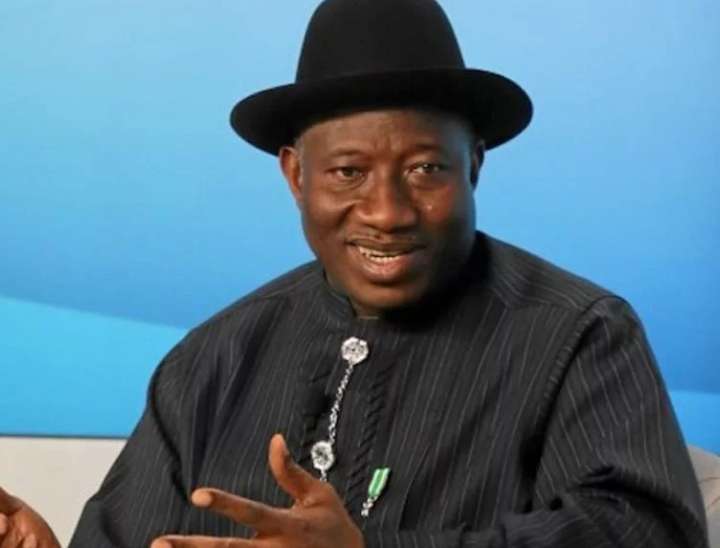
At the Goodluck Jonathan Foundation (GJF) Democracy Dialogue in Accra, former Nigerian president Goodluck Ebele Jonathan issued a stark warning: African democracy is under strain and—unless reformed—at risk of collapse. He singled out electoral manipulation as one of the continent’s gravest threats and urged urgent institutional reforms to protect citizens’ voice and choice. This analysis examines Jonathan’s claims, tests them against verifiable evidence, explores related root causes, and outlines actionable reforms to safeguard Africa’s democratic future.
Why This Speech Resonates Across Africa
When a former head of state convenes a democracy dialogue and publicly warns of democratic collapse, it is more than rhetoric—it reflects a perception shared by civic leaders and millions of voters across the continent. Jonathan’s credibility stems from his own record: he famously conceded defeat in Nigeria’s 2015 presidential election, setting a regional benchmark for peaceful transitions. His voice therefore carries weight beyond Nigerian borders.
The Accra dialogue drew political scientists, civil society leaders, and election observers from over a dozen African nations. Their collective testimony painted a consistent picture: democratic norms, once thought to be on an upward trajectory in Africa, are facing renewed stress from power-hungry elites, disinformation, and fragile institutions.
Jonathan’s Core Assertions
Jonathan’s remarks centered on three interlinked dangers:
Electoral manipulation
Tampering with voter registration, ballot counting, and result transmission to secure or prolong power.
Weak institutions and impunity
Electoral commissions and judiciaries that lack independence and resources.
Erosion of public faith
Citizens who believe their vote does not matter become apathetic, or worse, susceptible to violent or authoritarian alternatives.
While these concerns are familiar to democracy scholars, Jonathan stressed their urgency and interplay, warning that if left unchecked they could unravel decades of democratic progress.
Testing the Claims Against Evidence
Electoral Manipulation: A Regional Pattern
Empirical support
Election-monitoring missions and academic studies have documented manipulation across multiple African countries. Tactics range from subtle voter-roll tampering to blatant result falsification and intimidation of opposition parties. Disputed presidential elections in Kenya, Zimbabwe, and the Democratic Republic of Congo are only the most widely known examples. Nigeria itself has seen recurring debates over ballot snatching and electronic transmission glitches. These patterns validate Jonathan’s assertion that manipulation is more than isolated malpractice—it is a systemic risk undermining democratic legitimacy continent-wide.
Nuance
Not all African elections are flawed. Ghana’s peaceful and credible transfers of power in 2016 and 2020, for instance, showcase positive outliers. But the fact that some states manage clean polls does not negate Jonathan’s concern: even a few manipulated elections in large or strategically important countries can create regional instability and weaken continental norms.
Weak Institutions Amplify Threats
Jonathan highlighted the fragility of electoral commissions, courts, and legislatures—institutions meant to check executive overreach. Research consistently shows that when these bodies lack independence or resources, incumbents can exploit them for partisan advantage.
Examples include electoral commissions whose commissioners are appointed or dismissed at the president’s discretion, and judicial bottlenecks where post-election tribunals face political intimidation or crippling delays. Such weaknesses create fertile ground for manipulation and discourage opposition parties from seeking redress through lawful channels.
Public Disillusionment and Instability
Jonathan warned that citizens who perceive elections as meaningless may disengage from formal politics or embrace extra-constitutional remedies. Evidence supports this concern: countries with repeated electoral controversies often experience declining voter turnout and rising street protests. The Arab Spring uprisings of the early 2010s illustrate how disillusionment can escalate into mass movements when institutional remedies fail.
Overlooked Drivers That Deepen the Crisis
Jonathan’s focus on manipulation and institutional fragility is well-placed, but a complete diagnosis must include other powerful forces.
Economic exclusion and youth unemployment
Sub-Saharan Africa has the world’s youngest population, with over 60% under 25. Yet youth unemployment remains stubbornly high. Economic exclusion breeds frustration and makes voters vulnerable to vote buying and radicalization. When young people see elites manipulating elections while their own prospects stagnate, trust in democracy erodes rapidly.
Climate stress and resource competition
Droughts, floods, and desertification—exacerbated by climate change—intensify competition for arable land and water, fueling conflicts such as the farmer–herder clashes in Nigeria’s Middle Belt. Weak governance amplifies these tensions, which in turn can be exploited by political actors to destabilize rivals or justify authoritarian measures.
Digital disinformation
Encrypted messaging apps and deepfake technologies enable rapid spread of falsehoods that inflame ethnic tensions or delegitimize electoral processes. Combating this requires a combination of media literacy campaigns and transparent fact-checking partnerships.
External geopolitical influences
Foreign powers sometimes tilt African politics through covert funding, military partnerships, or strategic investments. These interventions can prop up weak regimes or encourage repression, complicating domestic reform efforts.
Interlocking Threats: A Systems Perspective
African democracy functions like an ecosystem: damage in one area cascades to others. Consider this cycle:
Electoral manipulation undermines trust.
Public trust declines, reducing voter turnout.
Lower turnout makes manipulation easier and cheaper.
The resulting legitimacy crisis invites either authoritarian crackdowns or violent protests.
Economic shocks or climate disasters act as accelerants, while disinformation serves as the spark. Jonathan’s emphasis on electoral reform is therefore well-founded: securing elections can break the cycle and create space for broader governance improvements.
Lessons from Country Case Studies
Nigeria
The 2023 general election highlighted both progress and persistent weaknesses. The introduction of the Bimodal Voter Accreditation System improved verification, yet glitches in electronic result transmission sparked opposition protests and court cases. The mixed outcome illustrates the importance of robust infrastructure and rapid dispute resolution.
Kenya
Kenya’s 2010 constitutional reforms created an Independent Electoral and Boundaries Commission with enhanced autonomy. While the 2017 presidential election was annulled by the Supreme Court due to irregularities, the very fact that the court could take such a bold step demonstrates institutional strengthening—a sign that reform, though messy, can yield real checks on power.
Ghana
Ghana consistently delivers relatively clean elections and peaceful transfers of power, earning praise as a democratic model in West Africa. Its success underscores the importance of independent electoral bodies and a political culture that respects judicial rulings.
Democratic Republic of Congo (DRC)
The DRC’s 2018 election was marred by allegations of result manipulation and internet shutdowns. Independent observers reported significant discrepancies between official tallies and parallel vote tabulations, illustrating the perils of opaque processes in a high-stakes environment.
These cases collectively show that reforms are possible—and that progress is neither linear nor uniform.
Evidence-Based Reform Pathways
Drawing on Jonathan’s call and comparative research, the following measures stand out:
Independent electoral management bodies
Secure appointment processes and budgetary autonomy. Mandate transparent procurement of election technology.
Transparent voter registration and result transmission
Maintain biometric voter rolls with routine audits. Publish polling-station-level results in real time.
Robust judicial oversight
Create fast-track electoral tribunals with enforceable timelines. Protect judges from political interference.
Curb money politics
Enforce donation caps and public disclosure of campaign finance. Empower civil society watchdogs to monitor expenditures.
Media freedom and digital literacy
Support independent journalism through legal safeguards and training. Partner with tech platforms to flag disinformation without enabling censorship.
Inclusive governance and youth engagement
Institutionalize participatory budgeting and youth councils. Link vocational training and entrepreneurship programs to civic participation.
Successful examples—such as Kenya’s constitutional reforms and Ghana’s independent electoral commission—demonstrate that these steps are achievable with sustained political will and civic pressure.
The Political Reality: Overcoming Resistance
Reforms threaten entrenched interests. Incumbents who benefit from manipulation often resist change. Overcoming this requires broad coalitions of civil society, business leaders, faith groups, and youth movements to demand accountability. Regional and continental pressure from bodies like the African Union can reinforce these demands. Incremental wins—starting with technical reforms like transparent result portals—can build trust and momentum for deeper legal changes.
Risks and Safeguards
Backlash: Poorly designed reforms may trigger polarization or be weaponized for partisan gain.
Authoritarian overreach: States may cite “electoral security” to justify internet shutdowns or surveillance.
Foreign interference: External actors may exploit reforms or provide cover for incumbents.
Mitigation requires constant civic vigilance and an informed electorate.
Conclusion: Urgent but Achievable
Goodluck Jonathan’s warning that electoral manipulation and weak institutions threaten African democracy is both credible and timely. Evidence across the continent supports his diagnosis. Yet democracy’s future is not predetermined. By strengthening institutions, improving electoral integrity, fostering economic inclusion, and countering disinformation, African nations can break the cycle of manipulation and rebuild public trust.
For SaharaNews247 readers, the takeaway is clear: democracy survives when citizens demand—and defend—transparent governance. Jonathan has sounded the alarm; it is now up to political leaders, civil society, and everyday Africans to act.
Recommended Resources
Coverage of Jonathan’s remarks and the GJF Democracy Dialogue — DailyTrust, ThisDay, PMNews, and Arise.
African Governance Report (UN Economic Commission for Africa) for data on institutional strength and electoral integrity.
Author Bio
Ngozi Adibe is a senior political correspondent with more than 12 years of reporting experience across West Africa. She has covered elections, governance, and security issues in Nigeria, Ghana, and Sierra Leone. Ngozi holds an M.A. in Political Communication from the University of Lagos and is a fellow of the West African Investigative Reporting Network.