
By Chinedu Okafor – SaharaNews247 Investigations
Published: September 1, 2025
A Controversy Unfolds
The Edo State government is facing heavy criticism after a civil society group accused the Ministry of Education of directing teachers in public schools to cut grass and perform menial tasks.
The allegation, made by the Edo State Civil Society Coalition on Human Rights, has sparked outrage among education stakeholders and human rights advocates. The group described the alleged practice as degrading, unconstitutional, and a direct assault on the dignity of the teaching profession.
In response, the Edo State Commissioner for Education, Dr. Paddy Iyamu, strongly denied the claims. He insisted that the ministry had not given such instructions and announced a full investigation to establish the facts.
The Allegations
According to the civil society coalition, teachers were instructed to clear bushes, cut grass, and handle tasks far outside their professional responsibilities. The group warned that if the practice continued, it would mobilize protests across the state and possibly take legal action.
The organization further argued that such directives, if proven true, would violate Nigeria’s 1999 Constitution, which prohibits forced or compulsory labour.
The Government’s Response
Commissioner Iyamu rejected the allegation, suggesting that where teachers were seen performing such tasks, it was likely voluntary. He pointed to instances of schools engaging in community service initiatives or what he described as “corporate social responsibility.”
Despite the denial, Iyamu confirmed that the ministry is conducting a comprehensive investigation. He assured that if any official is found to have coerced teachers, appropriate disciplinary action will follow.
Why This Matters
At the heart of the controversy lies the dignity and professional standing of teachers. Education experts warn that reducing teachers to manual labourers damages morale, erodes respect for the profession, and could have long-term effects on learning outcomes.
Beyond morale, there are constitutional implications. Section 34(1)(c) of Nigeria’s Constitution makes it clear that no one should be subjected to forced or compulsory labour. If substantiated, the allegations could set a dangerous precedent for public-sector governance.
Possible Explanations
While the investigation is ongoing, several possibilities exist:
Some school administrators may have asked teachers to step in where there were no maintenance staff.
Community-led clean-up exercises may have been misinterpreted as directives from the ministry.
Poor communication from local education offices may have created confusion.
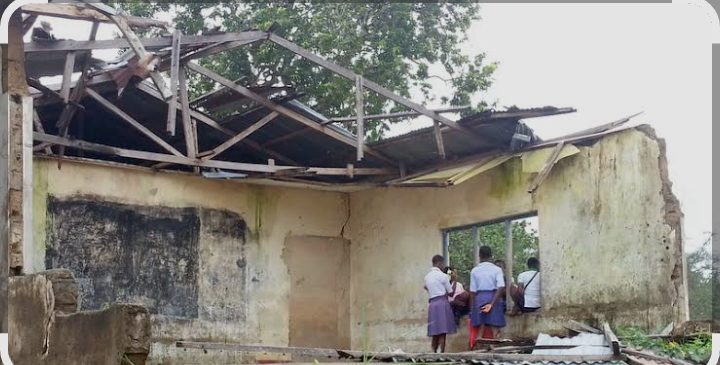
Inadequate funding for maintenance could have forced schools to rely on staff for basic upkeep.
Each of these scenarios highlights broader structural challenges in the education sector, particularly around budget allocation and school management.
What the Investigation Should Reveal
For credibility, the government’s probe must go beyond surface-level checks. Key steps include:
Publishing any memos or circulars that may have been misinterpreted.
Interviewing teachers confidentially to ensure honest testimony.
Reviewing maintenance budgets and staffing in public schools.
Establishing whether participation in clean-up activities was voluntary.
Releasing a public report with clear recommendations and corrective measures.
Such transparency would help rebuild public confidence and protect teachers from further reputational harm
The Bigger Picture
This controversy is more than just a dispute over grass-cutting. It raises questions about how Nigeria values its teachers and whether the government is investing enough in school infrastructure and support services.
If teachers are made to handle tasks outside their expertise, it not only undermines their status but also distracts from their core responsibility — teaching. The long-term losers in such a scenario are students, who deserve teachers focused on classroom learning rather than grounds maintenance.
What Happens Next
The Edo government must move quickly to conclude its investigation and publish the findings. Civil society organizations, teacher unions, and parents are all watching closely.
If the allegations prove true, the state may face legal battles, public protests, and lasting damage to its reputation. If they are proven false, then the government must still address why such claims arose in the first place and ensure communication lapses do not spark similar controversies.
Conclusion
The claim that Edo State teachers were forced to cut grass is serious but not yet proven. A respected civil society group has raised the alarm, while the government has denied wrongdoing and ordered a probe. Until the investigation concludes, the matter remains contested.
For the sake of teacher dignity and public trust, Edo State must handle this issue with transparency and urgency.
Author Bio
Chinedu Okafor is an investigative journalist with SaharaNews247. He specializes in governance, education policy, and human rights reporting. He holds an M.A. in Journalism from the University of Lagos and has covered public-sector reforms across several Nigerian states.