By Chinedu Okafor
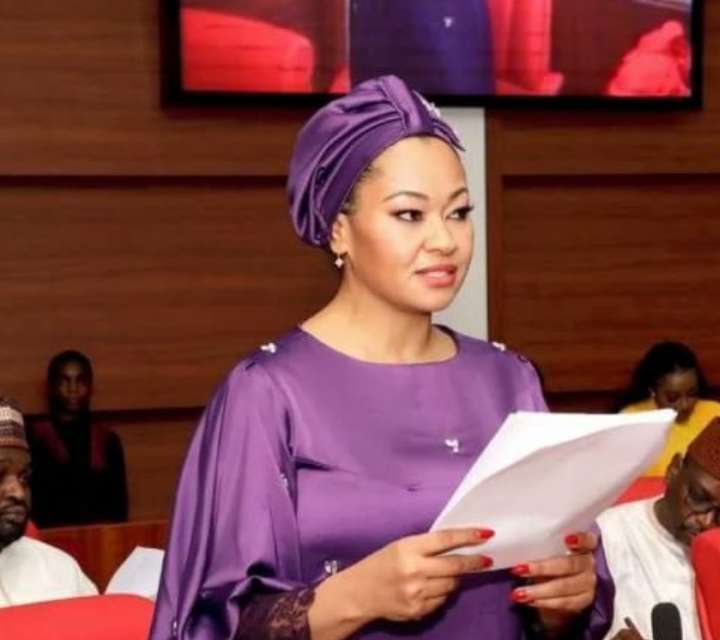
Justice Binta Fatima Nyako of the Federal High Court in Abuja has ordered all parties in the ongoing legal battle between suspended Senator Natasha Akpoti-Uduaghan and Senate President Godswill Akpabio to refrain from granting press interviews regarding the matter.
The directive, issued on Friday, followed a complaint from Akpabio’s lawyer, Kehinde Ogunwumiju (SAN), who alleged that Senator Natasha had been moving from one television station to another, discussing aspects of the case while it was still before the court. In her ruling, Justice Nyako warned that neither the litigants nor their lawyers should make public comments that could interfere with the judicial process.
Background of the Dispute
Senator Natasha Akpoti-Uduaghan, who represented Kogi Central Senatorial District before her suspension, filed a suit against Senate President Godswill Akpabio and three others. At the heart of her case are allegations of political victimization, irregularities in the Senate’s disciplinary process, and questions over fairness in the treatment of female politicians in Nigeria’s male-dominated political landscape.
The lawsuit has become a subject of national attention, as many observers believe it tests the limits of legislative authority and individual rights within the Nigerian Senate.
Why the Court Imposed the Gag Order
Akpabio’s legal team raised concerns that Senator Natasha’s repeated media appearances could influence public opinion and, by extension, place undue pressure on the court. Justice Nyako’s order is therefore meant to preserve judicial integrity and ensure that arguments are confined to the courtroom rather than played out in the media space.
Such restrictions, often referred to as gag orders, are not uncommon in Nigeria’s judiciary, especially in high-profile cases with strong political undertones.
Implications of the Ruling
For Senator Natasha, the order represents a major shift in strategy. Known for her outspoken nature and ability to use the media to rally public support, she now faces the challenge of pursuing her case strictly within legal boundaries without relying on public opinion.
For Senate President Godswill Akpabio, the ruling comes as a relief. It shields him from negative publicity that could potentially weaken his position and protects him from what his lawyers described as a “trial by media.”
For Nigeria’s political climate, the ruling underscores an ongoing debate about free speech, transparency, and judicial independence. While the restriction may safeguard the case from outside influence, it also limits public access to the perspectives of key political actors.
Legal Precedent and Public Reaction
Legal experts point out that Nigerian courts have a history of imposing restrictions on public commentary when sensitive matters are before the bench. This is often done to avoid prejudicing proceedings and to maintain respect for the judicial process.
Public opinion, however, remains divided. Supporters of Akpabio welcome the decision as a step toward fairness, arguing that the courtroom, not the press, should be the proper battleground. On the other hand, Natasha’s supporters believe the order is an attempt to silence a vocal female lawmaker who has consistently challenged entrenched political interests.
What Lies Ahead
The court is expected to continue hearings in the coming weeks, during which both parties will present further arguments. The outcome of the case could set an important precedent on the extent to which politicians can be restrained from using the media while engaging in legal battles.
Until a judgment is delivered, both Senator Natasha and Senate President Akpabio are bound by the court’s order to maintain silence in the media. The decision will likely influence not only the dynamics of this case but also the broader relationship between Nigerian politics, media, and the judiciary.
Conclusion
The Federal High Court’s decision to bar media commentary in the case between Senator Natasha Akpoti-Uduaghan and Senate President Godswill Akpabio highlights the complex intersection of politics, law, and public communication. While the ruling seeks to ensure fairness in the judicial process, it also raises important questions about transparency, the rights of public officials to express themselves, and the role of the media in shaping political discourse.
Author Bio
Chinedu Okafor is a political analyst and senior correspondent for SaharaNews247. He specializes in Nigerian politics, governance, and judicial affairs, bringing over a decade of reporting experience to his analysis of national issues.