By Smart Chuks
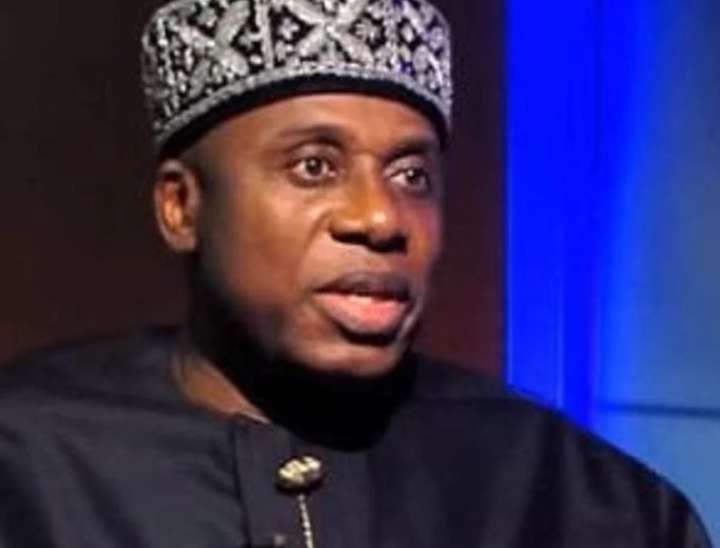
Nigeria’s political atmosphere is beginning to warm up again. Although the 2027 general elections are still some distance away, conversations, alignments and quiet power plays have already started shaping what may eventually become one of the most fiercely contested presidential races in the country’s history. It is within this emerging landscape that former Rivers State governor and ex-Minister of Transportation, Rotimi Chibuike Amaechi, made a declaration that has instantly altered calculations across party lines.
Amaechi’s words were blunt, unambiguous and deliberately final. He said he would not be vice president to anybody. With that statement, he shut down growing speculation that he could be paired as a running mate to former Vice President Atiku Abubakar, or any other northern presidential aspirant ahead of 2027.
In Nigerian politics, where ambiguity is often used as a strategic tool, clarity of this nature is rare. Even rarer is clarity that comes with such political weight. Amaechi’s declaration is not merely a rejection of a possible offer. It is a statement of ambition, identity and intent, and it sends a strong message about how he sees himself in the unfolding political equation.
This article takes a deep look at how the speculation began, why Amaechi felt compelled to respond, what his refusal truly means for Atiku Abubakar, how it affects the southern power rotation debate, and why this single statement could reshape the architecture of the 2027 presidential contest.
How the idea of Amaechi as Atiku’s running mate emerged
The idea that Rotimi Amaechi could deputise Atiku Abubakar did not originate from a formal announcement or a leaked negotiation document. Like many political narratives in Nigeria, it began with commentary. Dele Momodu, a respected media entrepreneur and longtime associate of Atiku, spoke publicly about possible political permutations ahead of 2027. In the course of discussing coalition options, he mentioned Amaechi as one of several individuals who could fit into a vice-presidential role.
In another political climate, such remarks might have been treated as harmless speculation. But in Nigeria’s highly sensitive power environment, words travel fast and acquire meaning beyond their original intent. Within hours, headlines emerged suggesting Amaechi was being “considered” as Atiku’s running mate. Social media amplified the narrative, political WhatsApp groups dissected it, and analysts began debating what such a ticket would mean for regional balance.
Amaechi’s camp wasted little time in responding.
Through his media aide, the former minister dismissed the speculation outright. The statement clarified that Amaechi was not interested in serving as vice president to anyone and that his political interest lay in pursuing the presidency itself. Those floating the idea, the aide insisted, were doing so without Amaechi’s knowledge or approval.
The denial was swift, firm and unmistakable. But it also raised a bigger question: why was Amaechi so determined to draw the line so publicly and so early?
Amaechi’s political journey and why hierarchy matters
To understand the weight of Amaechi’s position, it is important to understand who he is within Nigeria’s political ecosystem.
Rotimi Amaechi has never been a background player. As governor of Rivers State for eight turbulent years, he established himself as one of the most influential governors of his generation. His tenure as chairman of the Nigeria Governors’ Forum elevated him to national prominence, often placing him at the centre of power struggles involving the presidency, state governors and party leadership.
Later, as Minister of Transportation under President Muhammadu Buhari, Amaechi oversaw major infrastructure projects, particularly in rail development. While opinions on his performance remain divided, there is no dispute that he was one of the most visible and politically active ministers of that administration.
This history matters. Amaechi has spent most of his political life as a principal actor, not a subordinate. Accepting a vice-presidential role at this stage would represent a dramatic shift in trajectory, one that could permanently redefine his political identity.
In Nigerian politics, positions are not just offices; they are symbols. Being vice president can either be a stepping stone or a political ceiling. For Amaechi, the risk of the latter appears too high.
The unspoken but powerful issue of southern rotation
Perhaps the most critical context behind Amaechi’s refusal is the ongoing debate over power rotation between Nigeria’s North and South.
Since the return to democracy in 1999, Nigeria has largely operated an informal zoning arrangement aimed at preserving national balance. After eight years of President Muhammadu Buhari, a northerner, many political actors from the South believe that equity demands the presidency return to their region in 2027.
Amaechi has aligned himself firmly with this argument. Accepting a vice-presidential slot to a northern candidate would contradict the very principle he and others have been advocating. It would also weaken the South’s bargaining position in future negotiations.
By rejecting any talk of being a running mate, Amaechi is effectively saying that the South should not settle for the second position when it believes it deserves the first. This stance resonates with many southern politicians and voters who see 2027 as a test of fairness within Nigeria’s power-sharing arrangement.
At the same time, it puts pressure on southern leaders to match rhetoric with strategy. Demanding the presidency requires not just ambition, but unity and organisation.
Why Atiku Abubakar needed a figure like Amaechi
From Atiku Abubakar’s perspective, the attraction of Amaechi as a potential running mate is easy to understand.
Atiku remains one of the most recognisable political figures in Nigeria. His base in the North is strong, and his experience in national politics is unmatched by many of his contemporaries. However, his repeated presidential bids have also made him a polarising figure, particularly in parts of the South.
A running mate like Amaechi could have helped balance that equation. Amaechi brings southern credentials, administrative experience and a reputation for political toughness. He is also someone who understands campaign structures and grassroots mobilisation.
But politics is not built on convenience alone. While Amaechi might strengthen Atiku’s ticket electorally, the partnership would require Amaechi to accept a secondary role in a contest where he clearly sees himself as capable of leading.
His refusal therefore forces Atiku and his allies to rethink their strategy. It narrows the pool of potential southern partners and complicates the effort to present a ticket that satisfies both regional expectations and internal party dynamics.
A clash of ambition, not hostility
It is important to avoid framing this episode as a personal feud between Amaechi and Atiku. The available evidence suggests no direct confrontation between the two men. Rather, this is a classic case of intersecting ambitions.
Both Amaechi and Atiku see themselves as presidential material. Both have spent decades in the political trenches. Both believe they have what it takes to lead Nigeria. In such circumstances, the idea that one should automatically accept a subordinate position is unrealistic.
Amaechi’s statement is therefore less about rejecting Atiku as an individual and more about asserting his own place in the hierarchy of power.
The vice presidency and Nigeria’s history of sidelined deputies
Another factor shaping Amaechi’s decision is Nigeria’s historical treatment of vice presidents.
While the constitution outlines clear responsibilities for the office, the practical reality is that a vice president’s influence depends largely on the disposition of the president. Some vice presidents have been deeply involved in governance; others have been marginalised or rendered politically irrelevant.
For a politician with Amaechi’s experience and ambition, this uncertainty is a serious risk. Accepting a vice-presidential role without guarantees of influence could effectively stall his political career. Worse still, it could expose him to internal rivalries and power struggles without the authority to control outcomes.
Amaechi’s refusal reflects an understanding of these risks. He appears unwilling to place his political future in a position where control is limited and outcomes are uncertain.
Third-force politics and the ADC question
Amaechi’s stance has also reignited discussions about alternative political platforms and third-force movements.
Reports linking him to the African Democratic Congress suggest that he may be exploring options outside the dominant political parties. While third-party success in Nigeria remains challenging, recent elections have shown that voter behaviour is becoming less predictable, particularly among young and urban populations.
A credible third-force candidacy led by a well-known figure like Amaechi could reshape the electoral map, even if it does not ultimately win. It could force major parties into negotiations, alter campaign messaging and influence policy debates.
By refusing to be anyone’s deputy, Amaechi preserves his ability to explore these alternatives without appearing politically diminished.
What this means for southern unity
Amaechi’s declaration also highlights a growing challenge for southern politics: the problem of multiple ambitions.
If several southern heavyweights insist on running for president without a clear mechanism for consensus, the region risks fragmenting its vote. Such fragmentation could inadvertently strengthen northern candidates who are better able to consolidate support.
Amaechi’s stance therefore places responsibility on southern leaders to move beyond declarations and toward coordinated strategy. The question is no longer whether the South wants the presidency, but whether it can organise itself effectively enough to secure it.
Why voters should pay attention
For ordinary Nigerians, this episode is a reminder that the 2027 election is already taking shape behind the scenes. Decisions made now, statements issued early, and positions taken publicly all contribute to the final outcome.
Amaechi’s refusal tells voters several things. It shows that ambition remains strong among Nigeria’s political elite. It reveals the continued importance of regional balance in national politics. And it underscores the fact that alliances are fragile and subject to sudden change.
Voters should watch not just what politicians say, but how consistently they follow through.
What comes next
The significance of Amaechi’s declaration will ultimately depend on what follows. If he moves quickly to build a visible campaign structure, secure endorsements and formally align with a political platform, his refusal will be remembered as the starting point of a serious presidential bid.
If, however, the declaration is not followed by concrete action, it may come to be seen as a strategic posture designed to maintain relevance and bargaining power.
Similarly, Atiku’s next moves will matter. His choice of running mate, his approach to southern engagement and his response to the zoning debate will all shape the evolving narrative.
Final thoughts: a sentence that changed the conversation
In Nigerian politics, few statements are accidental. Amaechi’s declaration that he will not be vice president to anybody was deliberate, calculated and timed to maximum effect.
With one sentence, he rejected speculation, asserted ambition and reminded the political class that he sees himself not as a supporting actor, but as a potential lead. Whether that ambition translates into electoral success is uncertain. What is certain is that the road to 2027 has become more complex.
As the months unfold, alliances will shift, rhetoric will intensify and ambitions will collide. But long after the headlines fade, Amaechi’s refusal will stand as an early marker of a contest defined not just by who wants power, but by who is willing to settle for less.
About the Author
Smart Chuks is a Nigerian investigative journalist and political analyst with SaharaNews247. He focuses on elections, power dynamics and governance, producing in-depth political journalism designed for Nigerian and international audiences seeking clarity beyond the headlines.